

A practical view of website cost with ranges you can actually use.
Website Cost: 27 Proven Prices And Smart Savings
By Morne de Heer, Published by Brand Nexus Studios
You want clarity on website cost, not vague ranges or salesy guesses. This guide lays out real numbers, a working calculator, and the exact levers that shift price up or down.
We will map website cost by site type, show the line items that matter, and share quick ways to save without cutting quality. Keep this page handy as you scope and compare proposals.
For speed, jump to the free website cost calculator below, then scan the factors to see where your estimate might change. Every tip here focuses on practical, low risk improvements.
What drives website cost today
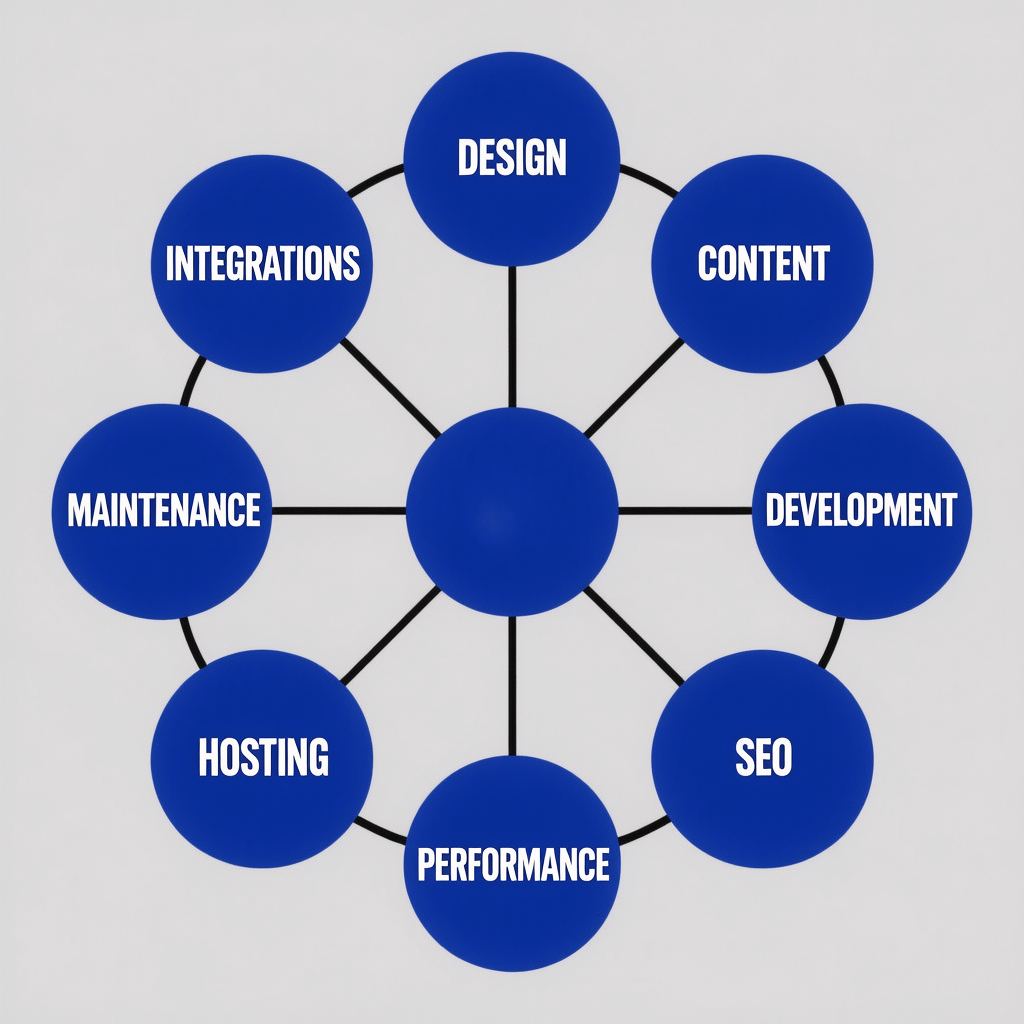
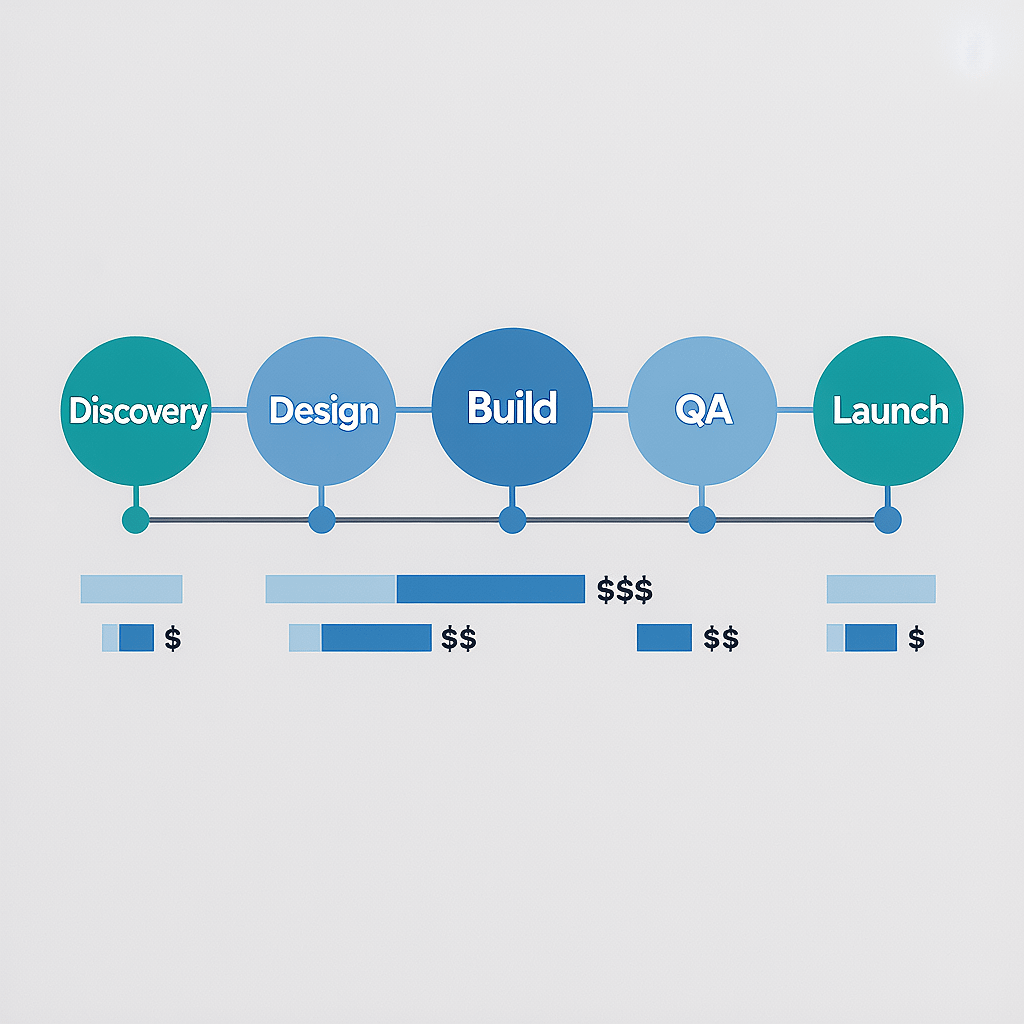
Start with the work, not the tools. Website cost follows the effort for strategy, design, content, development, QA, and launch. Platform choice and hosting tier shape ongoing spend.
Scope clarity helps most. When pages, templates, and features are well defined, website cost stabilizes and risks shrink. When they are fuzzy, revisions and overruns creep in.
- Site type and goals shape complexity and website cost.
- Page count and reusable templates anchor planning.
- Brand design, UX, and accessibility raise quality and effort.
- Content creation, media, and localization shift website cost quickly.
- Integrations, ecommerce, and membership raise development depth.
- Performance budgets, image compression, and caching impact scope.
- Security, backups, and maintenance drive ongoing website cost.
Website cost ranges by site type
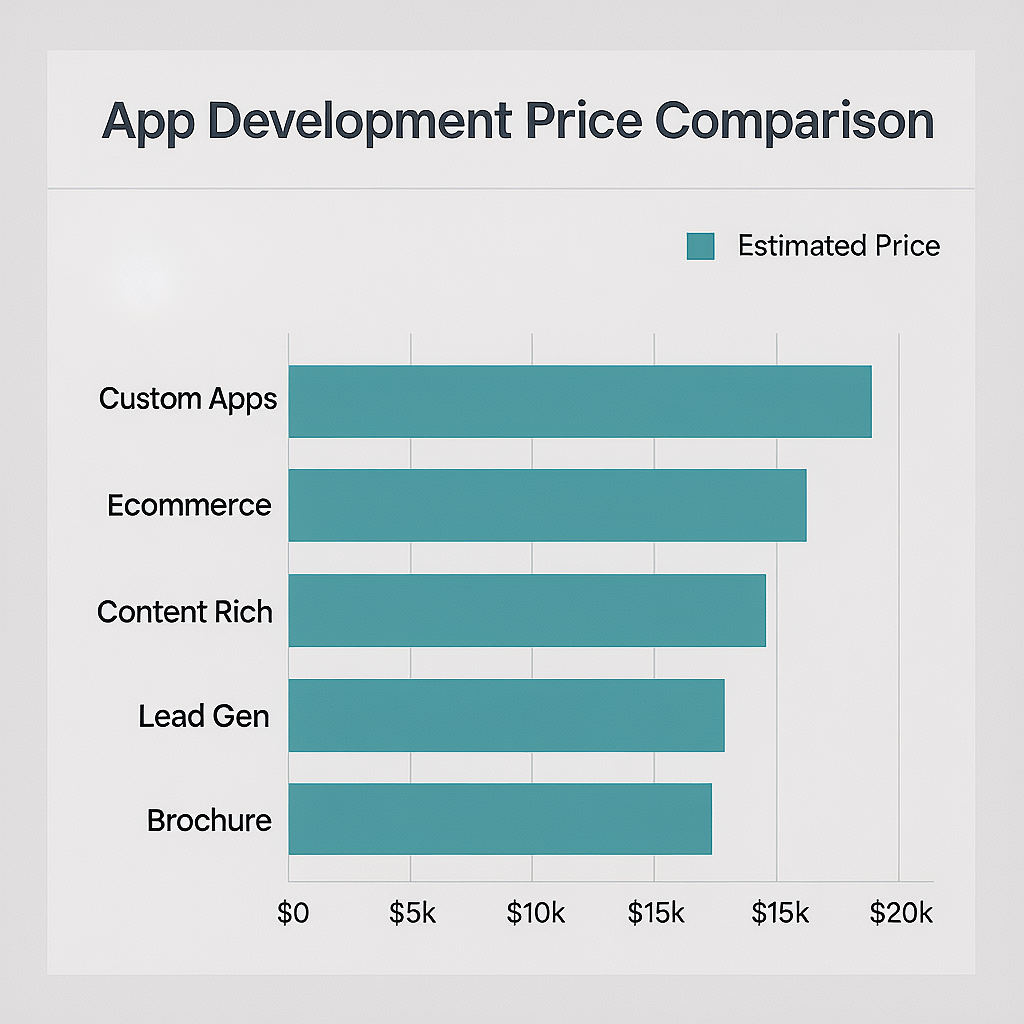
Anchor expectations with ranges. Your final website cost depends on the mix below, but these brackets help you plan a realistic budget and timeline.
Brochure and portfolio sites
For 1 to 5 pages, a theme based build with light customization keeps website cost between $1,000 and $4,000. Custom brand systems, animations, or advanced forms move that higher.
Lead generation small business sites
Expect 8 to 20 pages, reusable templates, and conversion tracking. Typical website cost lands between $3,000 and $12,000 depending on design depth and content readiness.
Content rich or multi service sites
Think 25 to 60 pages with structured content and search intent mapping. Website cost ranges from $8,000 to $25,000, with content and SEO driving most of the extra investment.
Ecommerce stores
Catalog size, product options, and checkout flows swing price heavily. A small to mid store often places website cost between $8,000 and $50,000, plus monthly platform and app fees.
Custom web apps or portals
When you move past standard CMS patterns into bespoke logic, website cost becomes a function of engineering hours and QA depth. Budgets commonly start at $30,000 and rise from there.
Free website cost calculator
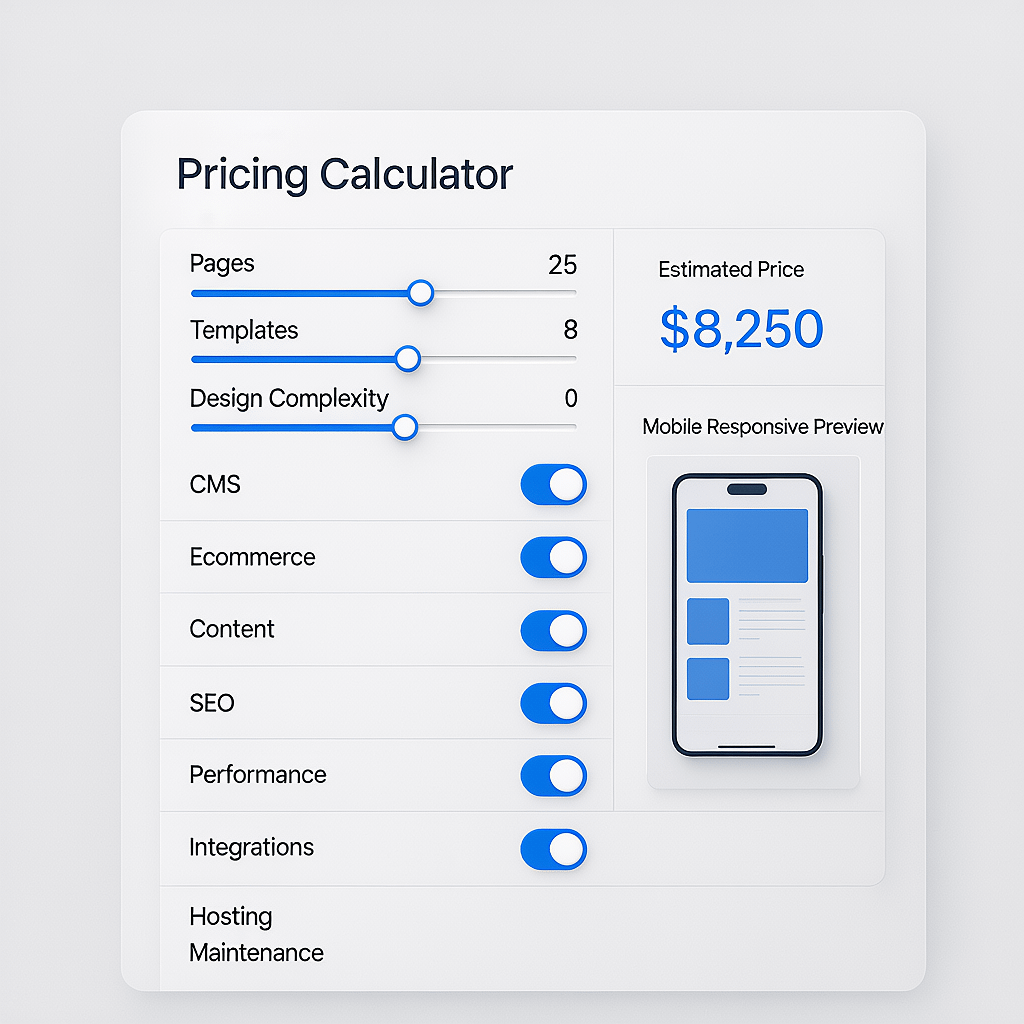
Use this quick calculator to frame your website cost before you chat with vendors. Adjust the sliders and options to reflect your real scope and content readiness.
This calculator provides planning ranges. Final website cost depends on scope, content readiness, QA depth, and timeline. Images should be compressed and caching enabled for best performance and lower hosting needs.
Line items that shape your website cost
Focus your budget where users feel it. This section breaks down website cost by discipline so you can see trade offs and plan phased rollouts that respect your goals.
Strategy and discovery
Kickoff, analytics review, and goal setting sharpen scope and lower the total website cost. Expect $500 to $3,000 depending on depth, stakeholders, and research effort.
Information architecture and UX
Site maps, wireframes, and component patterns prevent redesigns later. Allocate $1,000 to $6,000 and watch website cost drop downstream due to fewer revisions.
Visual design
Theme tuning is efficient. A custom design system adds polish but increases website cost. Budget $800 to $10,000 depending on templates, states, and brand expectations.
Front end development
Component driven builds improve reuse. Animation and interaction layers raise website cost. Typical front end ranges $1,500 to $12,000 for small to mid builds.
Back end development
CMS setup, fields, and custom post types vary. Integrations and bespoke logic drive website cost. Plan $1,000 to $12,000, more if headless or complex workflows are required.
Content creation
Words move users. Original copywriting increases website cost but improves ROI. Budget $150 to $600 per page for writing, editing, and on page optimization.
Media production
Photography, video, and illustrations help conversions. They can expand website cost fast. Consider stock with light editing to reduce spend without losing impact.
SEO and analytics
Proper technical setup and content mapping reduce future rework. It may raise initial website cost by a modest amount but protects your growth investment long term.
Accessibility
WCAG compliance avoids legal risk and expands audience reach. Testing and fixes add to website cost. Bake it into templates early to keep changes efficient.
Performance
Compress images, enable caching, and trim scripts. You reduce hosting load, lower bounce rates, and stabilize website cost by avoiding reactive fixes later.
Quality assurance
Cross browser and device testing save launches. QA often represents 10 to 20 percent of build hours and directly influences website cost through risk reduction.
Project management
Clear checkpoints, weekly updates, and documented decisions keep website cost predictable. Poor process multiplies revision cycles and erodes momentum.
Launch and training
DNS, CDN, backups, and rollback plans matter. Add client training to avoid post launch churn. Website cost here is small compared to the issues it prevents.
Ongoing maintenance
Updates, backups, vulnerability scans, and uptime monitoring protect the asset. Plan monthly website cost between $50 and $1,500 depending on risk and scale.
Timelines and how they affect website cost
Speed costs. Compressed timelines increase website cost because work stacks, QA shrinks, and night or weekend hours appear. A steady cadence lowers risk and stress.
Right size milestones. Group templates into waves and keep content arrivals predictable. Your website cost will stabilize because teams can plan and reuse components.
- 2 to 4 weeks for a simple brochure site.
- 6 to 10 weeks for a standard small business build.
- 10 to 16 weeks for content rich or ecommerce sites.
Content is the usual blocker. When copy and media land on time, website cost falls and launch dates hold. When they slip, schedule buffers vanish and budgets swell.
DIY, freelancer, or agency and the website cost tradeoffs
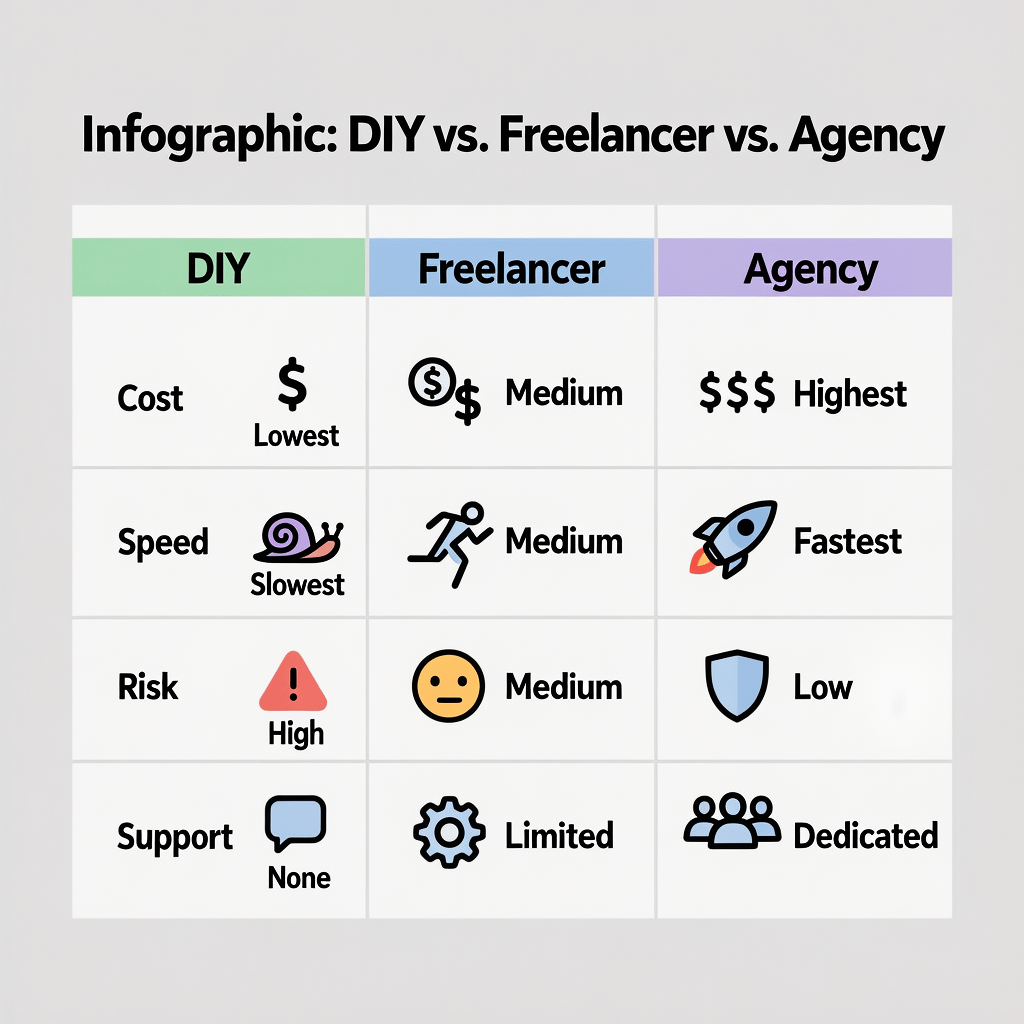
Choose the delivery model that fits your risk tolerance. Each option changes website cost and time to value in predictable ways. Pick the one that matches your goals.
DIY with a theme
This route keeps website cost lowest if your time is free. Expect to spend more hours on layout, performance, and SEO. It works for very simple sites.
Freelancer squad
A small team covers design and dev faster than pure DIY. Website cost sits mid range, but coordination and QA require your involvement to protect quality.
Specialist agency
You pay more to reduce risk, compress timelines, and integrate strategy with build. The higher website cost often pays back through better conversion and fewer rebuilds.
How to reduce website cost without losing quality
Trim spend in the right places. You can lower website cost while protecting UX and conversions if you prioritize foundations and phase high effort features smartly.
- Use a premium theme with a light design pass to cut website cost.
- Limit custom components to high impact templates like home and product.
- Phase integrations after launch to manage website cost and risk.
- Write first draft content internally, then hire editing for polish.
- Compress images, enable caching, and lazy load media for speed.
- Adopt a component library to reuse patterns and cap website cost.
- Deploy staging environments to reduce production surprises.
Measure trade offs. If a feature adds 2 percent conversion but doubles timeline, the website cost may not return. Ship a simpler version first, then iterate with data.
Budget scenarios and sample website cost estimates
Ground the ranges with examples. These scenarios show how scope and choices change website cost, timeline, and monthly spend. Adapt them to your goals.
Local services brochure site
- Scope: 5 pages, theme based, basic forms, basic SEO.
- Build: $1,800 to $4,200. Monthly website cost: $60 to $140.
- Notes: Use stock photos, compress images, and lean copy to launch fast.
Growth focused small business site
- Scope: 15 pages, hybrid design, blog, growth SEO, 2 integrations.
- Build: $6,500 to $16,000. Monthly website cost: $130 to $350.
- Notes: Reuse components, plan content early, and add features post launch.
Mid market ecommerce
- Scope: 40 pages, advanced store, product filters, CRM integration.
- Build: $25,000 to $60,000. Monthly website cost: $300 to $1,100.
- Notes: Focus on speed budgets, caching, and accessibility from day one.
Hidden costs and gotchas that inflate website cost
Plan for these and your website cost will track closer to estimates. Ignore them and budgets expand while timelines slip and teams burn out.
- License renewals for themes, plugins, and SaaS add annual website cost.
- Scope creep from extra templates or features without budget changes.
- Rushed content that needs rewrites, edits, and reuploads.
- Untested forms, payments, or mobile layouts that fail post launch.
- Uncompressed images and missing caching that slow the entire site.
- Security gaps that lead to emergency fixes and downtime costs.
Contracts, payment schedules, and transparency
Clear agreements protect both sides. A good contract keeps website cost tied to scope, milestones, and acceptance criteria so you always know where you stand.
- Milestones tied to deliverables prevent ambiguous website cost changes.
- Time and materials with caps can work if scope is evolving.
- Fixed price fits well with tight scopes and firm deadlines.
- Retainers for maintenance stabilize monthly website cost and response times.
Request weekly updates with burn charts. You will see how decisions impact website cost in real time and can adjust priorities before risks become surprises.
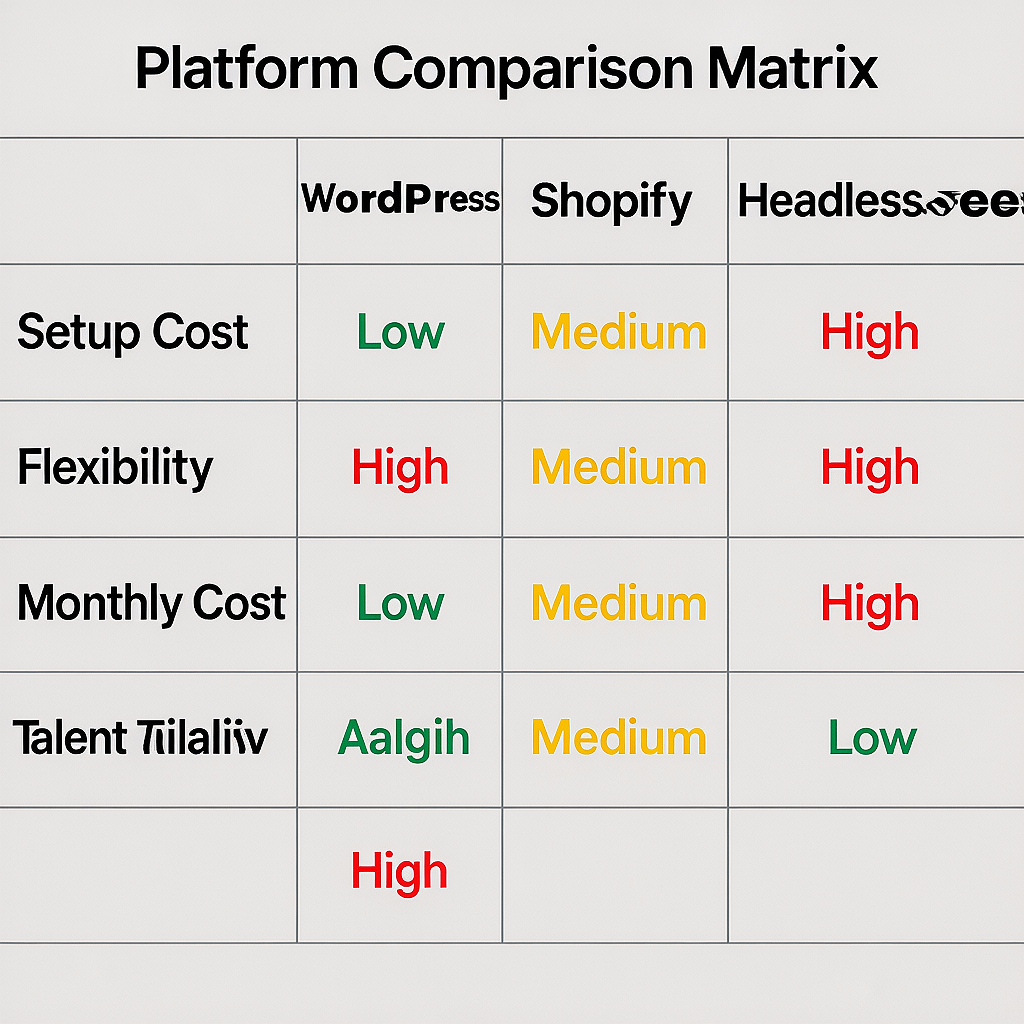
Platform choices and their impact on website cost
WordPress leads for flexibility and cost control. Theme ecosystems and broad talent pools keep website cost predictable for most small to mid projects.
Shopify simplifies ecommerce and payments with predictable fees. Website cost shifts from custom build to app subscriptions and revenue share on some plans.
Headless gives performance and developer freedom at the cost of complexity. Expect higher website cost for engineering and hosting orchestration.
If you are unsure, align platform to content model, team skills, and growth path. The wrong platform selection can double website cost over a year of fixes.
Performance, hosting, and monthly website cost
Performance is not vanity. Faster sites convert better and cost less to run. Compress images, enable caching, and trim third party scripts to reduce monthly website cost.
- Shared hosting works for low traffic brochure sites.
- Managed WordPress hosting balances speed and support.
- Cloud or VPS hosting supports higher traffic and complex apps.
Budget $12 to $200 per month for hosting. Add monitoring and maintenance to your monthly website cost so updates and backups are routine instead of emergencies.
When to bring in experts and how it changes website cost
Expert help shines when stakes are high. If SEO, performance, or ecommerce revenue matters, professional support can lower total website cost by preventing rework.
For design and development, website design and development services keep scope tight and code reusable so you pay for work that compounds value.
For visibility, SEO services ensure your content maps to search intent and that technical basics are correct from launch, protecting website cost from future fixes.
If you want simple, transparent pricing, review all inclusive packages that bundle build and maintenance. It keeps your monthly website cost steady and predictable.
Many teams choose Brand Nexus Studios when they want measurable outcomes and calm delivery. That balance keeps website cost aligned with growth, not guesswork.
FAQs about website cost
Get quick answers to common questions. Use these as prompts when you compare proposals so website cost stays transparent and aligned with your goals.
What is a realistic small business website cost in 2025?
Plan for $3,000 to $12,000 depending on page count, templates, content, and SEO. Scope clarity and content readiness usually lower website cost the most.
How much does an ecommerce website cost to launch and run?
Build ranges are $8,000 to $50,000 for small to mid catalogs. Ongoing monthly website cost for hosting, apps, and maintenance often sits between $100 and $1,000.
What drives website cost up the most?
Custom design systems, complex integrations, advanced ecommerce, and aggressive performance targets are the most common drivers of higher website cost.
How can I reduce website cost without hurting quality?
Use a proven theme, prioritize essential pages, compress images, enable caching, and phase high effort features after launch. Those choices reduce website cost safely.
What ongoing costs should I expect after launch?
Plan for hosting, maintenance, backups, monitoring, plugin renewals, analytics, and content updates. Monthly website cost depends on your traffic and risk tolerance.
Do I need an agency for a professional site?
Not always. DIY or freelancers can handle simple sites. When strategy, integrations, and growth KPI matter, an agency prevents rework and guards website cost.
Is a website cost calculator accurate?
Calculators give direction, not final quotes. Use them to frame conversations and sanity check proposals so website cost aligns with the outcomes you need.
A fast path forward
You now have a clear view of website cost, the levers that change it, and a calculator to set your budget. Use these tools to request apples to apples proposals.
If you want help scoping and delivering with less stress, Brand Nexus Studios can guide strategy, design, build, and maintenance in one accountable team.
Prefer fixed pricing and support from day one? Explore packages or reach out for a quick planning call. It is the easiest way to aim your website cost at real results.
References
About the Author




This article does a great job of explaining how various elements like SEO, content creation, and quality assurance add to the cost of a website. It’s easy to underestimate the time and effort involved, but this really paints a clear picture of the investment needed for a well-rounded website.