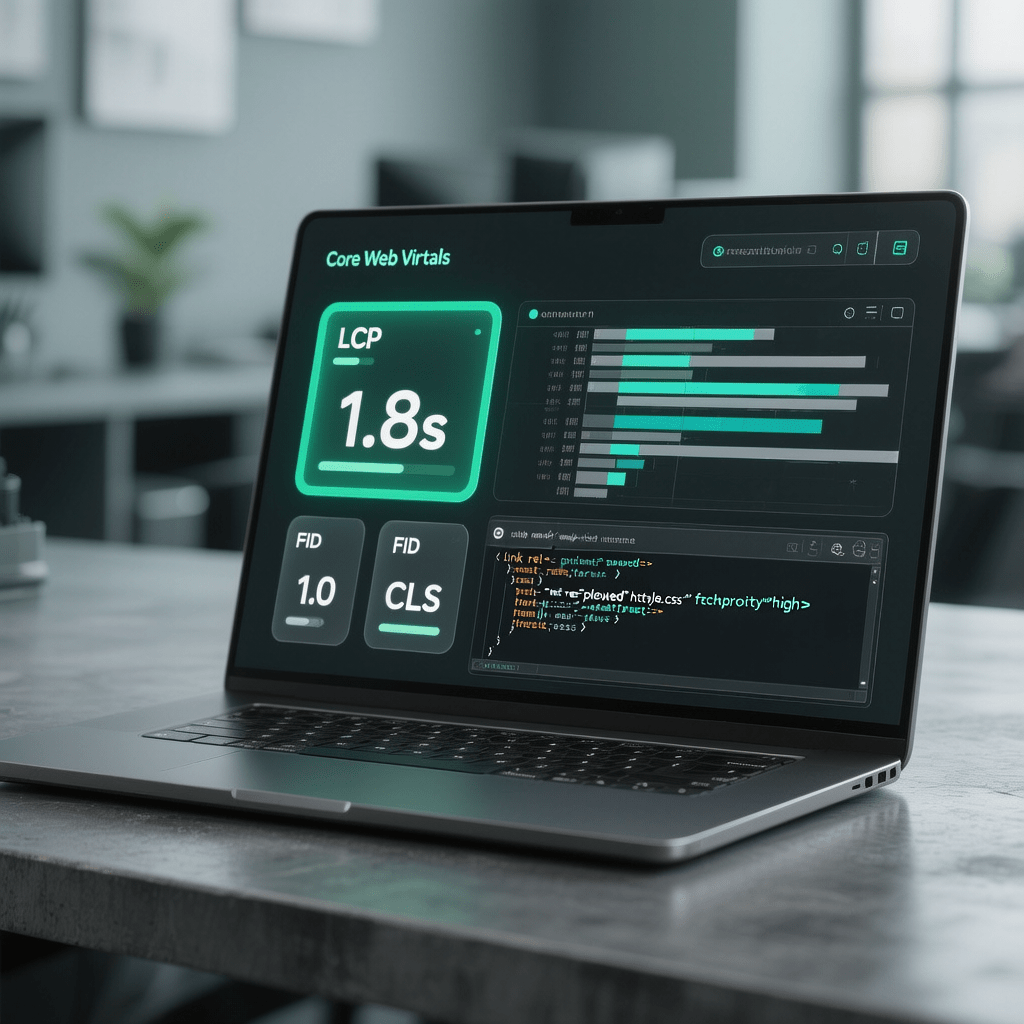
A performance workflow focused on how to improve largest contentful paint. All images are compressed for page speed.
Improve Largest Contentful Paint: 17 Proven Fixes
By Morne de Heer, Published by Brand Nexus Studios
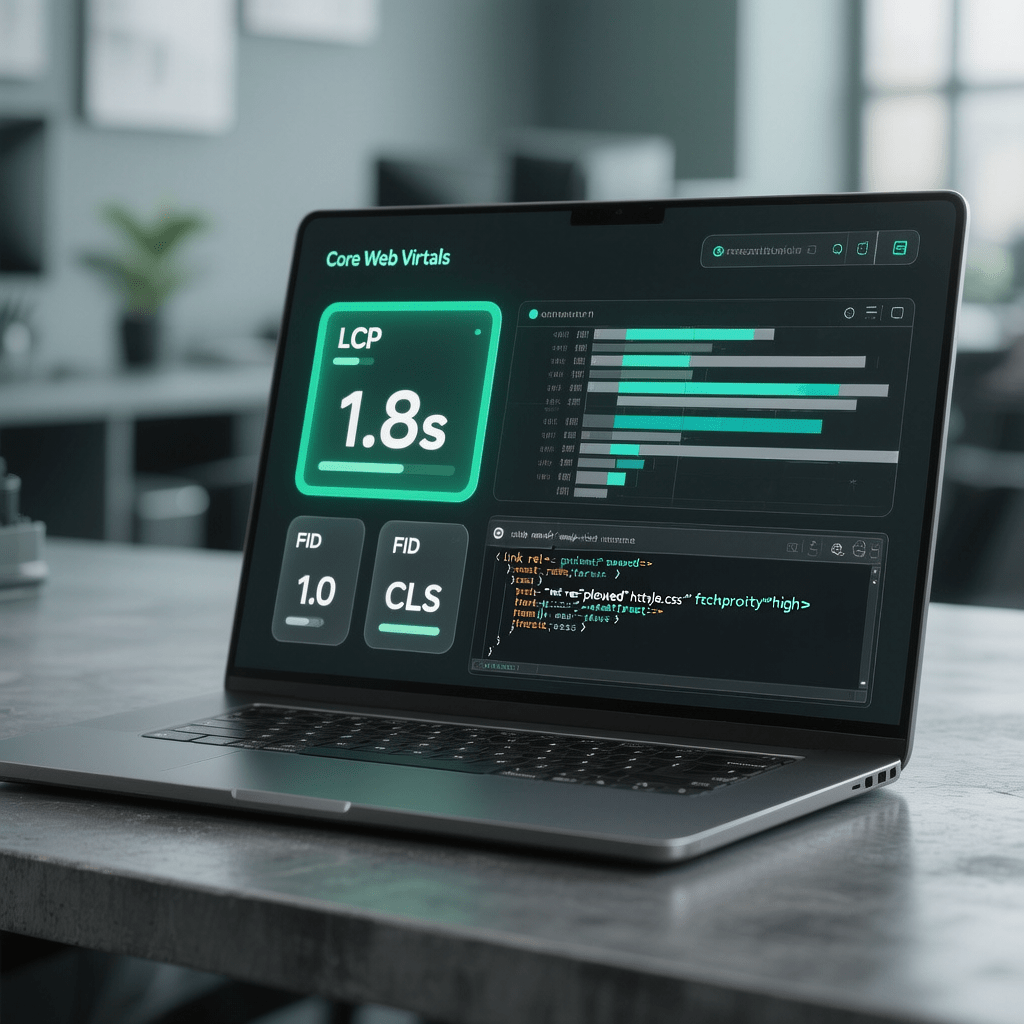
Speed sells. When pages feel fast, visitors stay longer, convert more, and trust your brand. If you want reliable, measurable wins, focus your efforts to improve largest contentful paint because it captures how quickly the main content becomes visible.
Here is the playbook. You will see exactly how to improve largest contentful paint with server upgrades, code-level tweaks, smart image handling, and WordPress specific settings. Each step is practical, easy to test, and proven to move the needle.
Throughout this guide we keep paragraphs short, highlight the why behind each tactic, and show how these changes work together. You will also see how caching and image compression combine with resource hints to improve largest contentful paint for real users on real devices.
Largest Contentful Paint explained and why it matters
Largest Contentful Paint, or LCP, measures the time it takes for the largest visible element in the viewport to render. In practice that element is often the hero image, a large text block, or a prominent video poster frame.
Google considers LCP one of the Core Web Vitals. A good LCP is 2.5 seconds or less for at least 75 percent of page views. When you improve largest contentful paint to meet that threshold, you reduce bounce rates and increase conversions.
LCP is not a single setting. Network latency, server speed, render blocking resources, image weight, and JavaScript execution all contribute. That is why a systematic checklist is the fastest path to improve largest contentful paint without guesswork.
How to measure and audit LCP the right way
Before you improve largest contentful paint, you need to know where you are. Use both lab and field data to get a complete picture. Lab tests show immediate impact. Field data validates that real users feel your changes.
Tools to pinpoint your LCP element
Use performance tools to identify the LCP element and its timing. In DevTools, record a Performance trace and filter for Largest Contentful Paint. Note the element type, size, and when it appears. That evidence will help you improve largest contentful paint with targeted fixes.
What your audit should capture
- Which element is LCP on mobile and desktop
- How long it takes to render and what blocks it
- Server timing and TTFB
- Requests that start before the LCP paint and their priorities
- Opportunities to compress, preload, or inline assets
Document these findings. When you improve largest contentful paint, you will want to confirm progress against a baseline, not a hunch.
17 ways to improve largest contentful paint today
These are the highest impact tactics. Tackle them top to bottom. Each one is a lever to improve largest contentful paint with predictable results.
1. Prioritize the critical rendering path
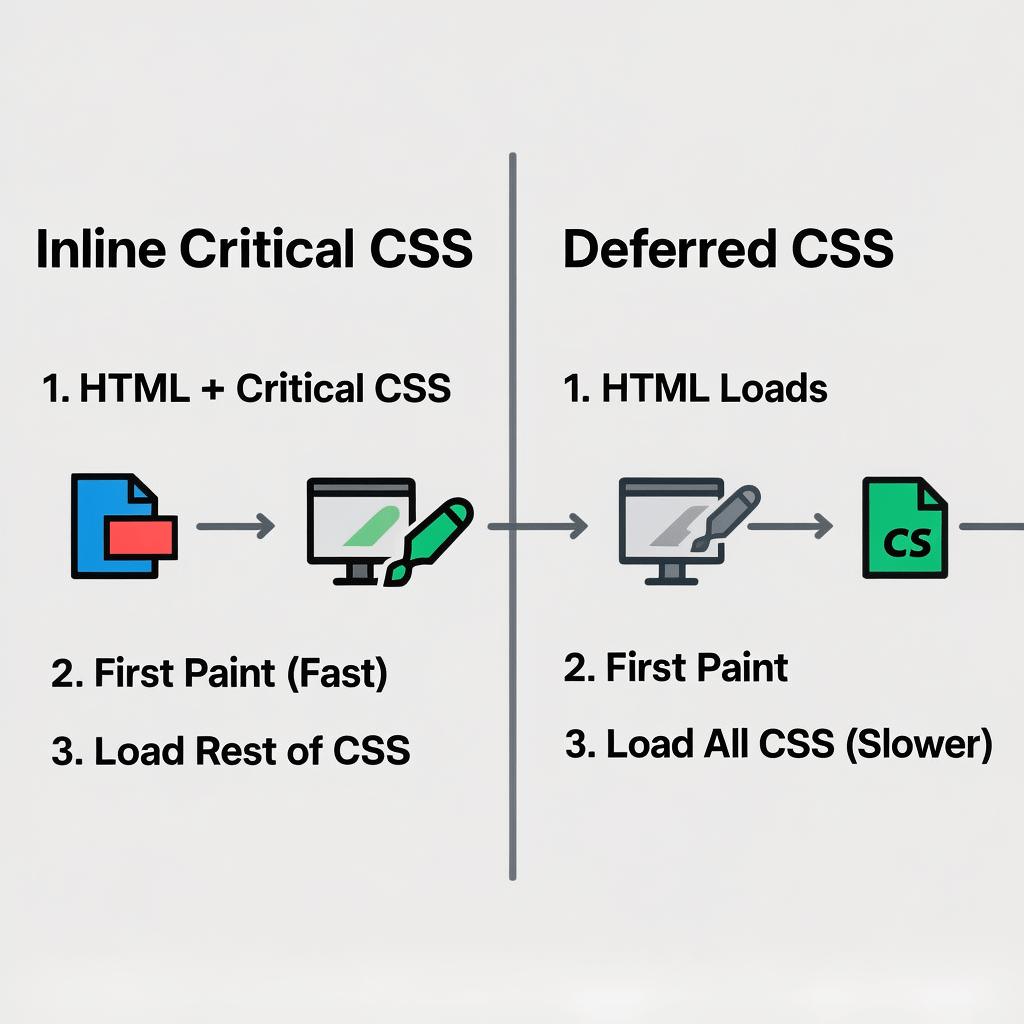
Start by making the browser do less work before the first render. Inline only the CSS needed for above the fold content and push everything else later. This reduces render blocking and helps improve largest contentful paint across templates.
2. Reduce server response time and TTFB
Server speed sets the floor for every metric. Move to performant hosting, enable server caching, and tune your database to cut TTFB. A faster first byte means your LCP element can arrive sooner, which will improve largest contentful paint across geographies.
3. Use a CDN for global delivery
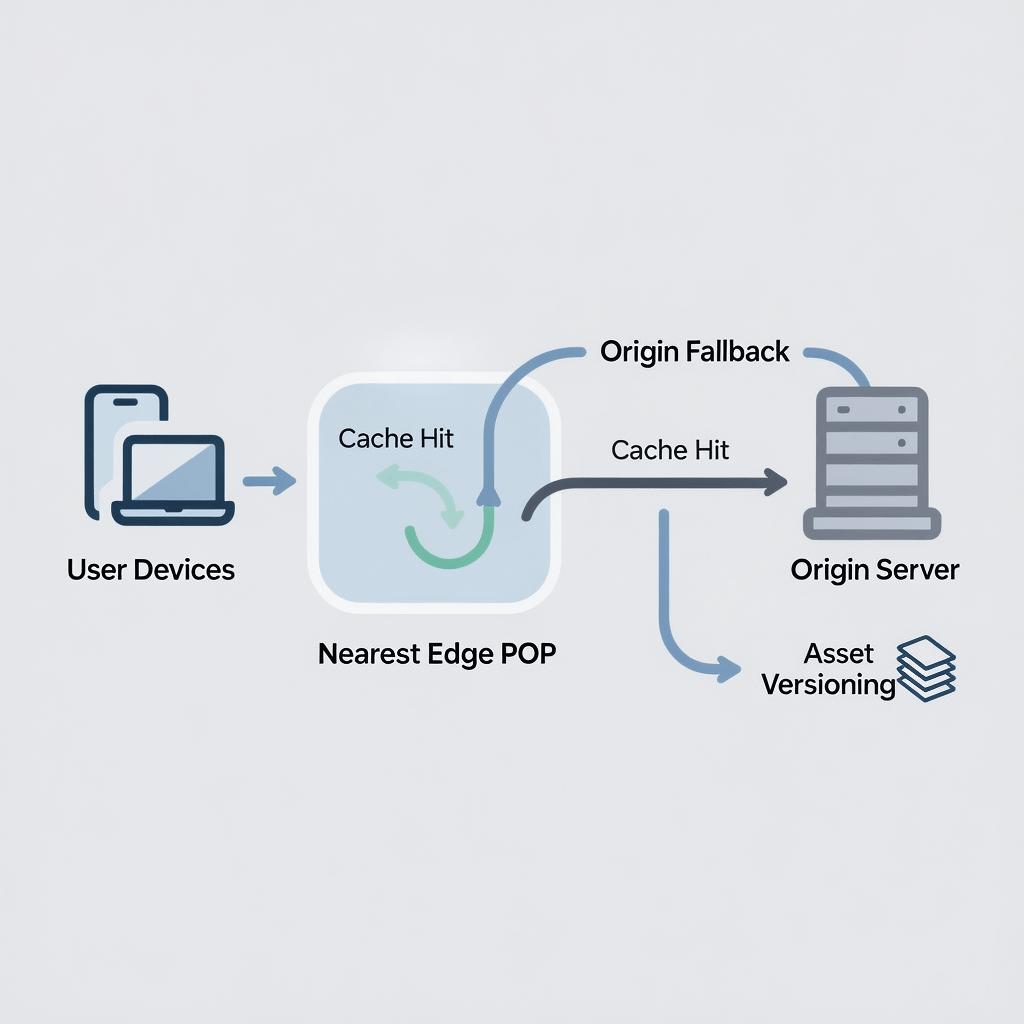
Distribute assets close to users. A CDN shortens network distance, reduces latency, and allows edge caching. Together these changes reduce wait time for the hero image and instantly improve largest contentful paint for international audiences.
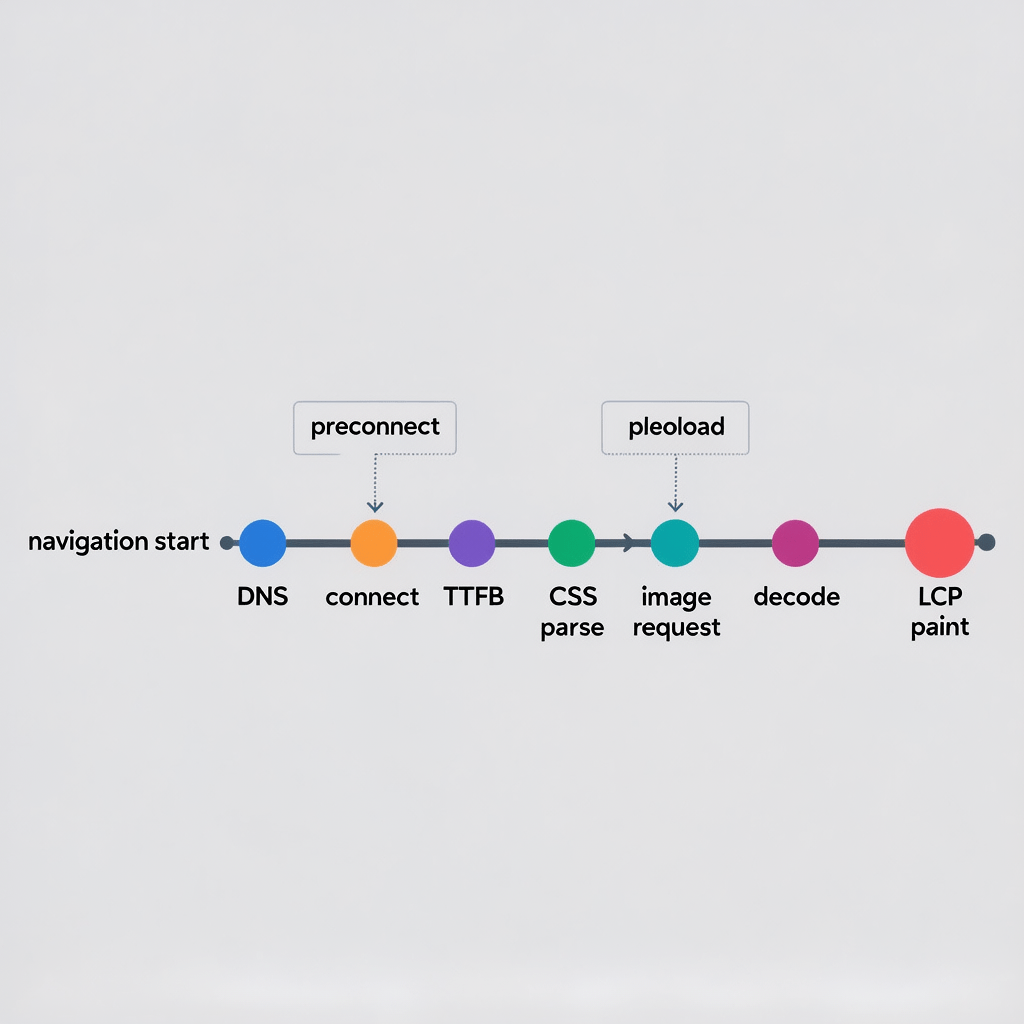
4. Add resource hints: preconnect, dns-prefetch, and preload
Tell the browser what matters most. Preconnect to critical origins, dns-prefetch third party hosts, and preload the LCP resource. These small tags often improve largest contentful paint by hundreds of milliseconds.
5. Eliminate render blocking CSS
Audit stylesheets. Split critical CSS, inline it, and defer non critical styles. Remove unused CSS where possible. This step alone can improve largest contentful paint if CSS is a major blocker.
6. Defer or delay non critical JavaScript
Stop shipping heavy scripts in the critical path. Use defer or async for scripts that are not needed for the first paint. Consider delay tactics that wait for user interaction. Less blocking JS will improve largest contentful paint and also tighten INP.
7. Reduce JavaScript execution time
Even deferred JS can cause main thread contention. Tree shake bundles, remove unused libraries, and prefer native browser features. When the thread is free, images decode faster and you improve largest contentful paint.
8. Optimize the hero image perfectly
Most pages have an image as the LCP element. Serve the right dimensions, compress aggressively, use next gen formats, and set an explicit width and height. These changes reliably improve largest contentful paint without harming visual quality.
9. Never lazy load the LCP image
Lazy loading is powerful for below the fold media, but it delays the hero. Exclude the LCP image from lazy loading. This single change often improve largest contentful paint more than any plugin setting.
10. Use fetchpriority for the LCP image
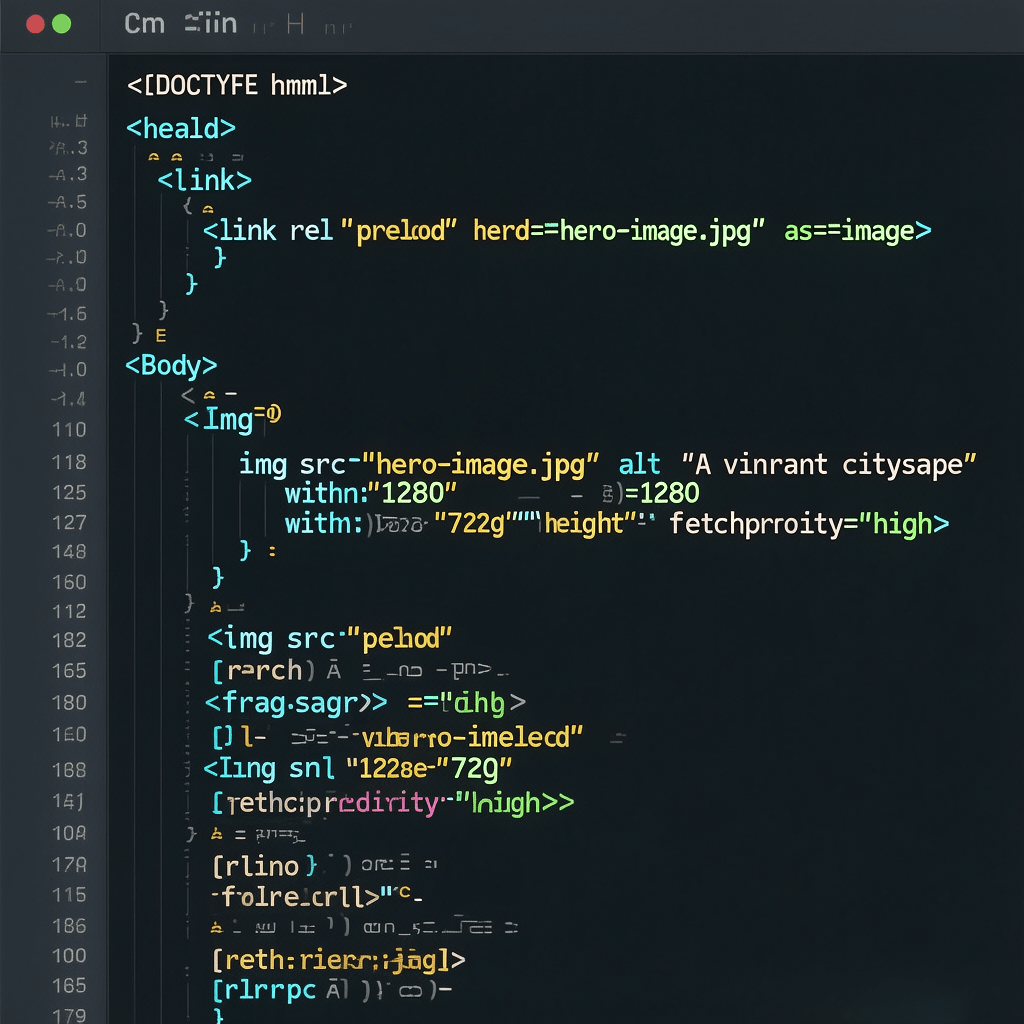
Add fetchpriority=high to the hero image so the browser requests it sooner. Combined with preload, this can improve largest contentful paint by making the most important resource arrive early.
11. Compress and deliver modern image formats
Convert hero images to WebP or AVIF and tune compression for balance. Keep the file under 150 KB if possible. Lighter images decode faster and improve largest contentful paint on mobile connections.
12. Serve responsive images with srcset
Ship the right size for each device. Use srcset and sizes so small screens do not download desktop sized heroes. This reduces transfer time and can improve largest contentful paint for budget devices.
13. Optimize fonts with font-display and preconnect
Invisible text delays paint. Use font-display: swap, subset fonts, and preconnect to font hosts. Reducing font overhead will improve largest contentful paint and stabilize layout quickly.
14. Trim the DOM and avoid heavy layout work
A bloated DOM increases style recalculation and layout cost. Keep the initial view lean. Smaller, simpler markup helps improve largest contentful paint and keeps the main thread responsive.
15. Cache smartly at every layer
Edge caching, server caching, and client side caching work together. Set long cache lifetimes for static assets and validate with cache headers. Robust caching strategies improve largest contentful paint on return visits and even cold starts.
16. Remove or postpone third party scripts
Marketing tags, heatmaps, and widgets are common blockers. Stagger their load until after interaction. You will improve largest contentful paint and preserve analytics accuracy by loading essentials first.
17. Pick a performance first theme and minimal plugins
On WordPress, the theme and plugins define your baseline. Choose a lightweight theme, audit plugins quarterly, and remove overlaps. A clean stack makes it easier to improve largest contentful paint and keep it green over time.
Advanced tactics to squeeze every millisecond
Once basics are done, advanced approaches can further improve largest contentful paint, especially on JavaScript heavy sites and headless front ends.
Server side rendering and hydration strategy
Render the initial view on the server so content appears fast. Hydrate only what is interactive. Partial or island hydration reduces main thread pressure and can improve largest contentful paint without sacrificing modern UX.
Edge runtime and HTML caching
Cache full HTML at the edge for anonymous traffic and vary smartly for personalized sections. Faster HTML arrival shortens the path to the first paint and helps improve largest contentful paint globally.
Use Priority Hints correctly
Apply importance high to the LCP image, and importance low to non critical assets. Combined with fetchpriority and preload, priority hints improve largest contentful paint with precise control.
Progressive enhancement and conditional hydration
Ship lean HTML and CSS first, then enhance when needed. Conditional hydration loads code only when a component is visible or used. This pattern can improve largest contentful paint on content pages without rewriting your app.
WordPress focused checklist to improve largest contentful paint
If you run WordPress, use this checklist to improve largest contentful paint within hours, not weeks.
- Audit your homepage and top landing pages. Identify the LCP element and timing. Document before metrics.
- Replace the hero with a compressed WebP or AVIF. Set exact width and height and remove lazy loading on that image.
- Add a preload tag for the hero with as=image and correct type, and set fetchpriority=high on the img element.
- Inline critical CSS for the header, hero, and first section. Defer or async all non essential JS files.
- Disable unused plugins and remove duplicate functionality. Every plugin you remove can improve largest contentful paint.
- Enable page caching and object caching. Verify that cache control headers are set for static assets.
- Activate a CDN and serve images, CSS, JS, and fonts from the edge. Confirm lower TTFB in your waterfall.
- Use srcset and sizes on hero images. Supply 1x and 2x variants and test on mobile.
- Limit web fonts. Use two families max and only the weights you need. Add preconnect to the font origin.
- Defer analytics and marketing tags until after the first interaction if possible.
Follow this list, then retest. You should see measurable gains. On many sites these steps alone improve largest contentful paint by 500 ms to 1.5 s.

Measurement discipline that keeps LCP green
You cannot improve largest contentful paint once and forget it. Release cycles, new plugins, and content changes will creep in. Create a cadence to measure and act.
- Track Core Web Vitals weekly and monitor the 75th percentile for mobile users.
- Validate key templates before publishing new sections.
- Automate synthetic tests for your top 10 pages.
- Set budgets for image size, CSS, and JS to control bloat.
When regressions appear, roll back or hotfix fast. A small image or script regression can undo weeks of work to improve largest contentful paint.
Where LCP meets SEO, UX, and revenue
Good performance is not only a technical checkbox. When you improve largest contentful paint, you create an immediate perception of quality. Fast pages reduce pogo sticking, lift engagement, and make every channel more efficient.
If your team needs help turning these tactics into a plan, consider partnering with a specialist. The right blend of technical SEO, UX, and engineering can improve largest contentful paint and unlock compounding wins across your funnel.
For example, aligning a clean codebase with strong internal linking and optimized media can improve largest contentful paint while also strengthening topical relevance. That synergy is valuable for search and for users.
Smart internal linking and platform foundations
Content strategy and platform foundations work together. Good information architecture helps users discover content faster, and a well tuned stack ensures it appears quickly. That mix will improve largest contentful paint and overall Web Vitals.
If you are planning a redesign, anchor your decisions in performance. A thoughtful build will improve largest contentful paint by design, not as an afterthought. See our website design and development approach for principles that keep speed central.
Technical SEO complements build quality. Structured data, clean markup, and fast rendering send stronger signals. If you want a roadmap and implementation partner that can improve largest contentful paint while strengthening search, review our SEO services.
Ongoing visibility matters. Dashboards and reporting keep teams focused on real outcomes. To operationalize these metrics and continue to improve largest contentful paint over time, our analytics and reporting services can help you separate signal from noise.
Note: this article mentions image compression and caching repeatedly because they are high leverage. Compress images, set caching headers, and enable page caching to improve largest contentful paint on every visit.
Common pitfalls that keep LCP high
Even experienced teams hit snags. Avoid these traps so your attempts to improve largest contentful paint are not undermined.
- Lazy loading the LCP image by accident. Exclude it explicitly.
- Preloading too many resources. Only preload what is essential for the first view.
- Shipping heavy AB testing libraries on all pages. Scope them to experiments only.
- Overusing web fonts and icons. Simplify and subset.
- Ignoring third party blockers like chat widgets that delay paint.
- Compressing images once and forgetting future uploads. Automate compression in your media pipeline.
If you correct these, your other optimizations will work as intended and you will improve largest contentful paint consistently across templates.
Developer tips and implementation patterns
Engineers can wire in patterns that improve largest contentful paint by default. A few habits go a long way.
- Adopt a performance budget that fails builds when hero images exceed a size cap.
- Set fetchpriority=high on the largest image in the initial viewport programmatically.
- Automate critical CSS extraction during the build process.
- Use HTTP 2 or HTTP 3 to parallelize and speed up resource delivery.
- Audit third party dependencies quarterly and remove unneeded code paths.
These practices reduce manual oversight. You will improve largest contentful paint in every release without rework.
Case style scenarios and expected gains
Realistic scenarios help set expectations. These composite examples show how teams improve largest contentful paint and what gains are typical.
Heavy hero image on mobile
Problem: a 900 KB hero image with no width or height, lazy loaded by default. Fix: convert to AVIF, compress to 120 KB, add width and height, remove lazy loading, add fetchpriority and preload. Outcome: improve largest contentful paint from 4.1 s to 2.1 s on a mid tier phone.
Blocking CSS and multiple web fonts
Problem: three full CSS files in the head and four font weights. Fix: inline critical, defer the rest, subset fonts, and use font display swap. Outcome: improve largest contentful paint by 1.2 s and stabilize text quickly.
Slow server on global traffic
Problem: users far from origin see high TTFB. Fix: move to faster hosting and add a CDN with edge caching. Outcome: improve largest contentful paint by 800 ms in distant regions.
JS heavy landing page
Problem: large framework and analytics load block the main thread. Fix: defer non critical scripts, split by route, and delay marketing tags. Outcome: improve largest contentful paint by 600 ms and improve INP by 30 percent.
FAQs
What is a good LCP score?
A good LCP is 2.5 seconds or less at the 75th percentile. Aim to improve largest contentful paint for mobile first, since mobile is often slower.
How do I find my LCP element?
Run a performance trace and look for the Largest Contentful Paint entry. The tool will show the element. Fix that element first to improve largest contentful paint.
Should I lazy load images?
Yes for below the fold images. Never for the hero. Excluding the hero from lazy loading will improve largest contentful paint dramatically.
Do fonts and icons affect LCP?
They can. Limit fonts, subset glyphs, and use swap. Lighter resources improve largest contentful paint and reduce layout shifts.
How often should I test?
Test weekly and after any major change. Continuous checks help you improve largest contentful paint and keep it stable over time.
Will a CDN fix everything?
A CDN helps a lot but it is not a silver bullet. Pair it with code and media optimization to improve largest contentful paint in a sustainable way.
What about INP and CLS?
Optimize all Core Web Vitals. Defer heavy JS and stabilize layout to improve largest contentful paint, INP, and CLS together.
References
Explore authoritative resources used to shape this guide:
About the Author